Your culture looks great on the wall — until you ask ten employees what it actually means.
Right now, 3,000 employees are telling 3,000 different versions of your company's story — to customers, partners, candidates, and each other. Some are accurate. Most are incomplete. A few are completely wrong. AhaPlay turns your culture deck into structured team programmes where people discuss what the company story actually means, align on how to tell it, and build the confidence to tell it consistently — across every team, every department, every site.
Predict: What % of employees can accurately describe their company's strategy?

Click Continue to submit your answer.
Align: What's the #1 thing every new hire should understand about our culture?
Author's Suggestion
Team Suggestion
Your team has aligned on a team answer.
Capture: How would you explain what our company does to a friend?
Describe what our company does in your own words...
Work as a team. Complete your response to continue.
Rate: How well does your team's description match our official company narrative?
Author's Suggestion
Team Suggestion
Now, work as a team. Compare the pinned items, choose an answer, discuss it and align on a team answer to continue.
List: What are the 3 things every employee should know about our company?
Writing together
Group List
Work as a team. Write and agree on group list items to continue.
Programme Results
34%
Divergence
↘ −21%
82%
Alignment
↗ +15%
11%
Resistance
↘ −6%
91%
Commitment
↗ +9%
Alignment Index Over Time
412
Total
Commitments
How does your current approach stack up?
In the rush to adopt AI, culture feels like something you'll get to later. That's exactly backwards.
Right now, your teams are using AI to draft emails, write proposals, and create client-facing content faster than ever. Every one of those outputs reflects their understanding of who you are, what you do, and why it matters. If that understanding is shallow or inconsistent, AI doesn't fix it — it scales it. The companies treating culture as a luxury while racing to adopt AI aren't saving time. They're automating confusion. The approaches below were built for a slower world — posters, onboarding decks, town halls. None of them were built for an era where every employee is a publisher. Here's how they compare.
Speed to deploy
AhaPlay
Depth of understanding
AhaPlay
Consistency across teams
AhaPlay
Business impact
AhaPlay
Sustained fluency
AhaPlay
| Onboarding & Culture Decks | Town Halls & Events | Managers & Leadership | Engagement & Comms Platforms | AhaPlay | |
|---|---|---|---|---|---|
| Speed to deploy |
Fast for new hires. But the culture deck gets shown once in week one and never revisited. Existing employees never see it at all.
|
Fast. A town hall takes a day, an offsite takes a week. Energy spikes and fades. No lasting fluency.
|
Depends entirely on each manager. Some are natural culture carriers. Most have never been taught how to articulate the company story — because no one has.
|
2–4 weeks to configure. But these platforms measure engagement, not understanding. They tell you how people feel — not whether they can explain who you are or what you do.
|
Days. Programme generates in hours, deploys automatically.
|
| Depth of understanding |
Surface level. People read the values. They can't explain what they mean in practice, or tell the company story to a customer or candidate.
|
Inspirational but fleeting. The CEO tells a great story. A week later, no one can retell it accurately.
|
As deep as your best manager and as shallow as your worst. One great leader in engineering and one disengaged manager in sales means two completely different cultures.
|
Not measured. Engagement scores tell you whether people like working here — not whether they understand the company, its products, its history, or its differentiation.
|
Deep. Shared version teams can articulate.
|
| Consistency across teams |
Identical content, inconsistent understanding. Everyone reads the same deck and takes away something different.
|
Whoever attended gets one version. Whoever missed it gets the version their colleague remembers — which is already different.
|
Wildly inconsistent. Each manager passes down their own interpretation. Multiply that across ten departments and you have ten different cultures.
|
Consistent distribution of surveys and posts. No mechanism for checking whether the understanding behind the responses is consistent across teams.
|
Alignment Index across departments.
|
| Business impact |
None that's traceable. You can't connect a culture deck to sales performance, hiring quality, or customer experience.
|
Anecdotal. 'The energy was great.' No data on whether it changed anything.
|
Real but invisible. A great culture-carrying manager drives retention and performance in their team — but you can't see it in your dashboards and you can't replicate it.
|
Engagement correlation. You can see that engaged teams perform better — but you can't prove that your comms platform caused the engagement, or that engagement equals understanding.
|
Every commitment recorded and traceable.
|
| Sustained fluency |
One and done. The deck is shown in week one. By month three, it's forgotten. By year two, the company has changed and the deck hasn't.
|
Spike and fade. Enthusiasm peaks at the event, drifts within weeks. Next quarter's town hall starts from scratch.
|
Only as durable as your retention. When a strong culture-carrying manager leaves, their team's understanding walks out the door with them.
|
Continuous measurement, no continuous building. You keep taking the temperature, but you're not doing anything to raise it.
|
Ongoing check-ins. Fluency built continuously.
|
The approaches above aren't wrong. They're just incomplete. Decks and onboarding expose. Events inspire. Managers interpret. Platforms measure sentiment. But none of them build the shared, deep fluency that turns a culture deck into something every employee can articulate with confidence. AhaPlay is the only one designed to close that gap — and prove it's closing.
How it Works
From culture deck to company-wide fluency in weeks. Here's how.
Start with your company's story.
Upload your culture deck, brand book, company narrative, or employee handbook. It doesn't matter if it's a polished brand guide or a rough internal wiki. AhaPlay reads it, extracts the key themes, values, history, and differentiators, and turns it into a structured fluency programme your entire organisation can work through in weeks.
Your Company Story
Upload your culture deck, brand guidelines, company history, product overview, or employee handbook. AhaPlay turns it into a structured fluency programme every team can work through.
PDF, DOCX, or PPTX
Traditional approach: The culture deck exists. It gets emailed to new hires on day one and mentioned at the annual all-hands. Nobody revisits it. Nobody discusses it. Nobody checks whether 1,000 people actually understood the same thing.
Contextualise it for your organisation.
Your company story is the starting point. But a programme that works for a 500-person design studio isn't the same one that works for a 3,000-person consumer goods company with teams across six countries. AhaPlay reads your materials, extracts the context it can (industry, company size, product portfolio, values), and asks about the rest (who's going through it, what the biggest gaps are, where fluency breaks down). Same story. Programme shaped to your reality.
Traditional approach: The culture deck was written for a company half your current size, before you expanded to three new markets. Nobody has updated it. Nobody has checked whether it still reflects who you actually are today.
AI generates the full programme. In hours, not months.
In hours, AhaPlay generates a complete multi-week culture programme: discussion topics, team exercises, storytelling practice, and fluency milestones. What used to take months of internal comms planning happens while you get on with your day.
No facilitator. By design.
The methodology manages group dynamics, structures the conversation, and drives teams to alignment — the structure does what a facilitator would, consistently, in every session.
USPTO-patented mechanics.
The interaction engine that makes non-facilitated team sessions work at scale is protected under U.S. Patent No. 12,585,326.
Traditional approach: Your internal comms team spends months writing scripts, filming videos, and building slide decks that get watched once and forgotten.
Generating your culture fluency programme…
Your team reviews and approves.
Nothing goes live without your sign-off. Review every session, adjust the tone, add stories that only insiders know. You stay in control; the AI just did the heavy lifting.
Traditional approach: HR writes the culture content, marketing writes the brand content, sales writes the pitch content, and none of them tell the same story.
Programme
Company Fluency at Hartwell & Co
Who are we? The 60-second version
Our history: the moments that made us
What do we actually sell? Products, value, and differentiation
Our customers: who they are and why they choose us
Culture in action: stories that show who we really are
The pitch: telling our story with confidence
Session 1: Who are we? The 60-second version
Activity 1 of 6
Predict: What's our company's mission, in one sentence?
Your prediction
AhaPlay runs the programme automatically.
Sessions are scheduled, teams are notified, participation is tracked, and progress is measured in the four indices, all without anyone having to project-manage it. The platform handles the logistics so your team can focus on actually learning the company's story — before AI amplifies every gap in understanding.
Traditional approach: Someone in HR or internal comms spends weeks coordinating schedules, sending reminders, tracking who attended, and chasing the teams that didn't. A full-time job that never ends.
Programme Results
34%
Divergence Index
↘ −21% this month
82%
Alignment Index
↗ +15% this month
11%
Resistance Index
↘ −6% this month
91%
Commitment Index
↗ +9% this month
Alignment Index Over Time
Commitments
Teams meet, discuss, and own the story.
This is where passive knowledge becomes active fluency. Teams don't read a culture deck. They work through structured sessions where they share their perspectives, discuss the company's history, benchmark their understanding against proven frameworks, and commit to how they'll represent the company in their specific role. Every session alternates between individual reflection and team collaboration. First you think alone. Then you align as a group, and you can't move forward until the team agrees. This isn't a webinar. It's a working session that produces visible output: shared narratives, collective understanding, and genuine confidence. The result: your engineering team and your sales team don't just know the same facts about the company. They can both tell the same story, in their own words, with conviction, to anyone who asks.
Predict: What % of employees can accurately describe their company's strategy?
Click Continue to submit your answer.
Align: What's the #1 thing every new hire should understand about our culture?
Author's Suggestion
Team Suggestion
Your team has aligned on a team answer.
Capture: How would you explain what our company does to a friend?
Describe what our company does in your own words...
Work as a team. Complete your response to continue.
Rate: How well does your team's description match our official company narrative?
Author's Suggestion
Team Suggestion
Now, work as a team. Compare the pinned items, choose an answer, discuss it and align on a team answer to continue.
List: What are the 3 things every employee should know about our company?
Writing together
Group List
Work as a team. Write and agree on group list items to continue.
Programme Results
34%
Divergence
↘ −21%
82%
Alignment
↗ +15%
11%
Resistance
↘ −6%
91%
Commitment
↗ +9%
Alignment Index Over Time
412
Total
Commitments
✦ Information doesn't change behaviour. Structured peer conversation does — because when your team commits together, following through stops being optional.
Quarterly refreshes keep the story alive.
Companies evolve: new products, new markets, new customers, new milestones. AhaPlay schedules recurring touchpoints where teams update their understanding, incorporate new stories, and re-align on what matters. This creates a living culture, not a static document that ages in a drawer.
Traditional approach: Send an annual employee engagement survey and hope one of the questions about "understanding our mission" gets a decent score.
Alignment Index Over Time
Programme: Company Fluency at Hartwell & Co
Commitments
Recent Commitments
Use our agreed 60-second company story in every customer meeting this quarter. Replace my improvised version with the one our team built together.
Session 6: The pitch: telling our story with confidence
Update our customer success story library monthly. Every team member contributes one real example per quarter of how we delivered value.
Session 4: Our customers: who they are and why they choose us
Case Study
One values deck. Five hubs. Three continents.
Five different cultures.
Paysafe needed 3,300 employees across five global hubs to understand the same company story. Local facilitators were running the same onboarding differently — shaped by their function, their city, their interpretation. Here's what changed.
Paysafe × AhaPlay
How a global payments company unified onboarding across three continents
Paysafe operates across five main hubs on three continents — from engineering in Sofia to commercial teams in London and Jacksonville. Every location ran onboarding in person, with local facilitators delivering the same values deck. But each facilitator shaped the session around their site's primary function. Engineering hubs emphasised technical culture. Sales offices focused on customer stories. The values were the same words — but the meaning shifted at every location. In theory, one culture. In practice, five.
The result: location silos from day one. New hires felt connected to their office, not to the company. And L&D teams at every site were running the same workshop monthly — repetitive, costly, and increasingly hard to staff with engaged facilitators.
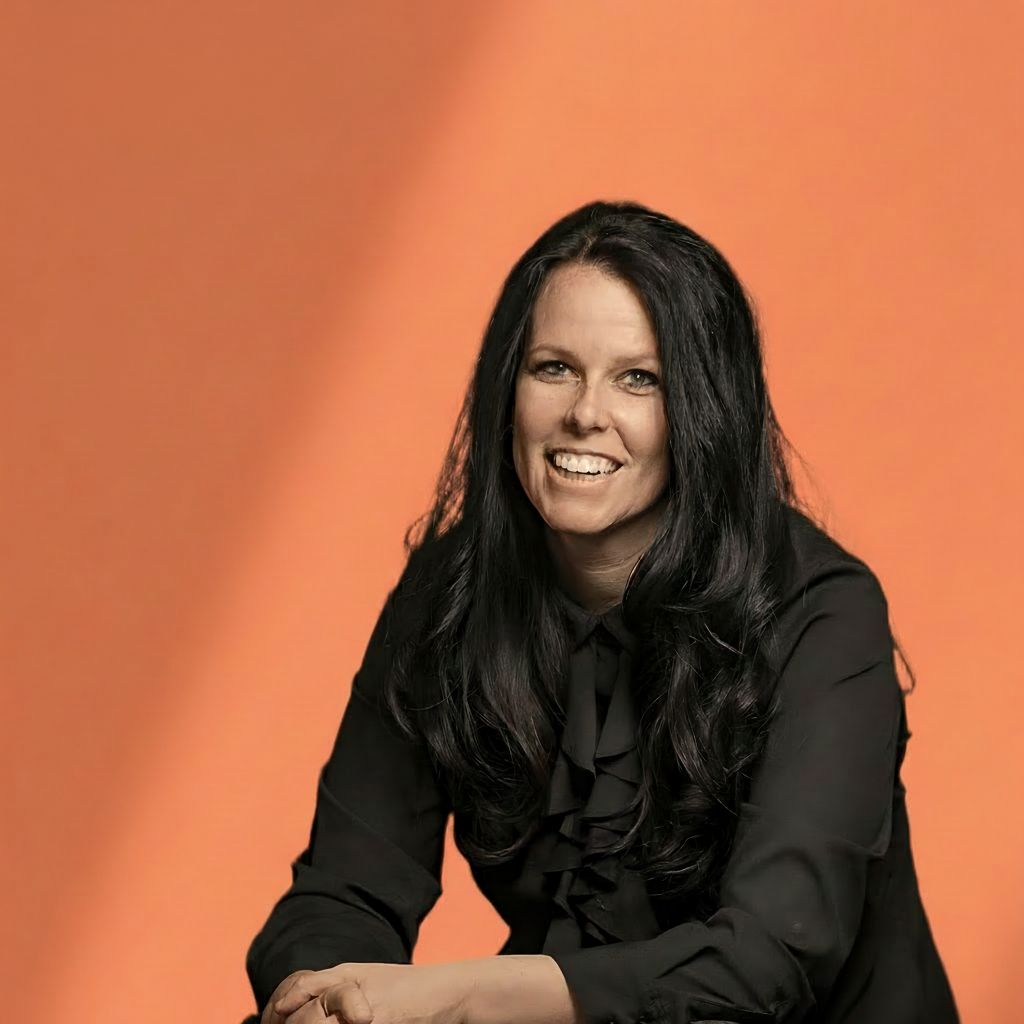
"We had one values deck but different interpretations at every hub. Each location was onboarding people into a slightly different version of Paysafe. We needed consistency without losing what makes each site unique."
— Jenna Dobbins, SVP People & Culture
5 hubs, 3 continents
One programme. Same experience everywhere.
Day one
New hires get the real culture, not a local interpretation.
Zero facilitators needed
Teams run sessions themselves. L&D freed from monthly repetition.
One values deck. Five hubs. One shared understanding. That's what becomes possible when culture isn't filtered through whoever happens to be running the workshop.