← Back to The Alignment Gap
01What could go wrong?
02Everything.
03Why it matters.
The Alignment Gap
Comfortable for Whom?
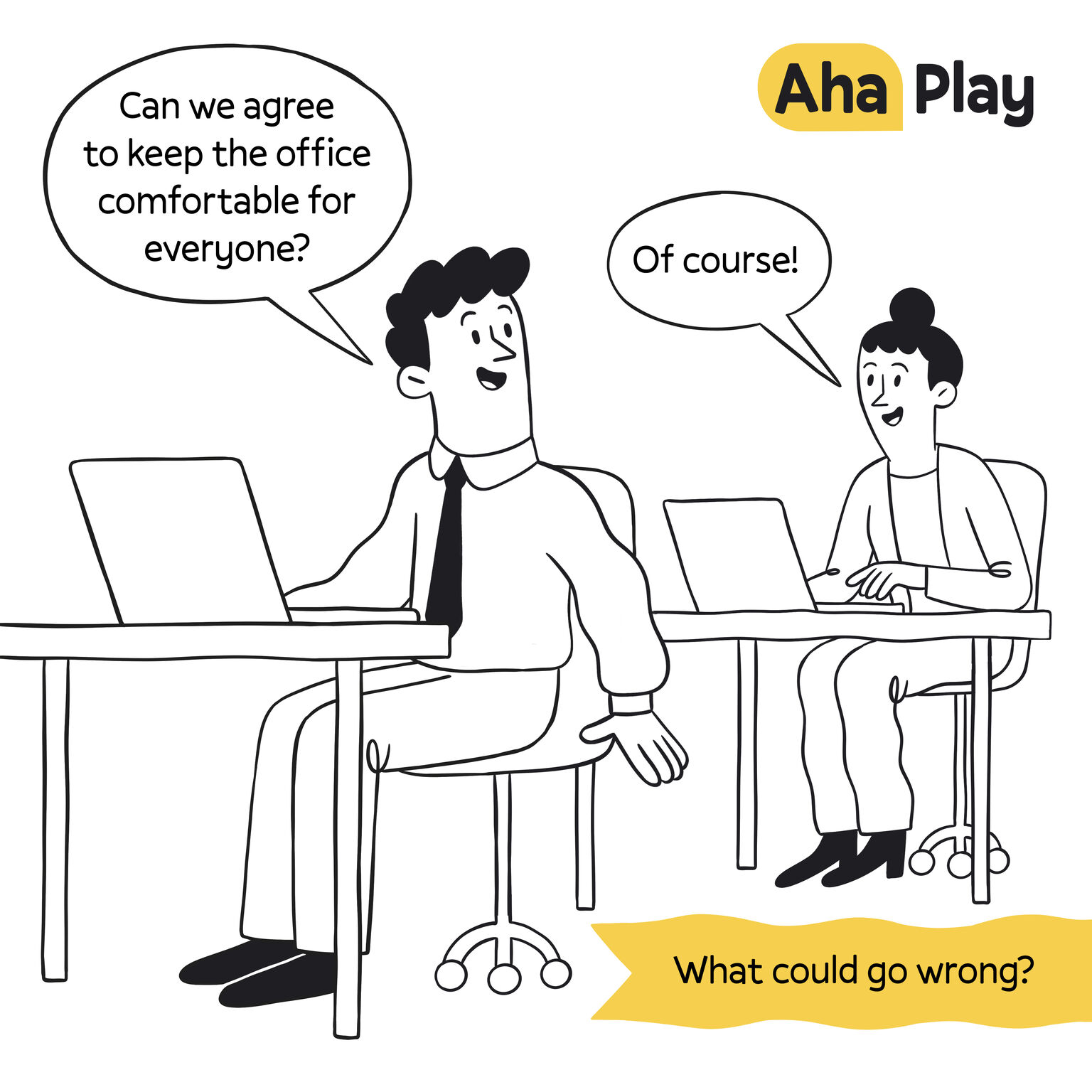
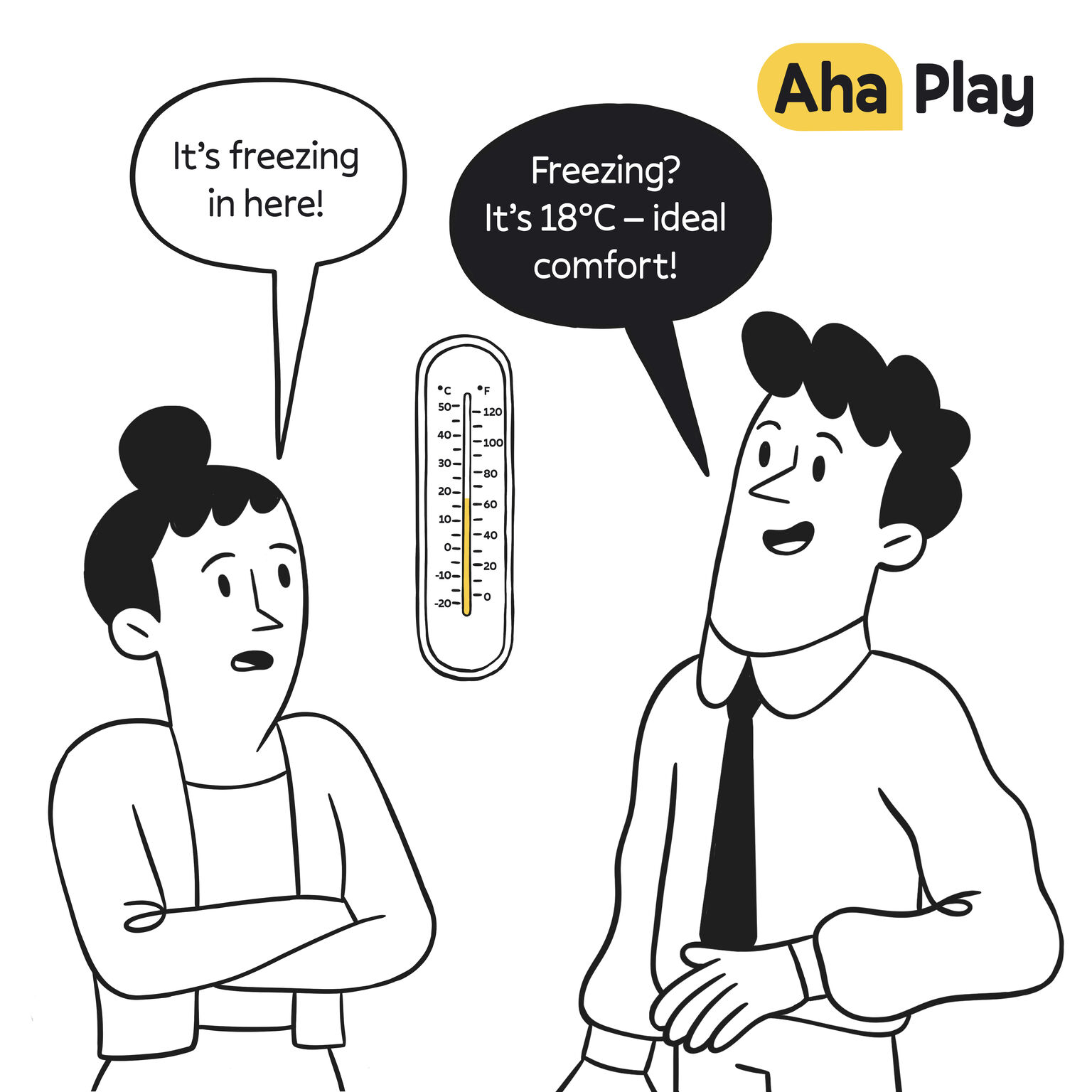
The story: They agreed to keep the office comfortable for everyone. Of course! Then she said it was freezing. He said 18°C is ideal comfort. She was cold. He had data. Both were right inside their own experience of the same room. The agreement was genuine. The standard was personal.
What it means for organisations: "Comfortable for everyone" sounds like a policy but is actually a collection of individual preferences pretending to be one. This plays out far beyond thermostats — in communication styles, meeting formats, workload expectations, and feedback norms. When organisations agree to make something comfortable without defining whose comfort sets the standard, they haven't made a decision. They've deferred one.